
03 Oct 2026, 12:09 PM
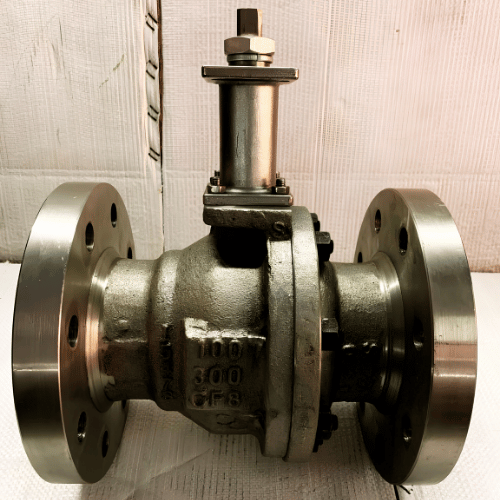
A reliable valve is essential for controlling and isolating fluid flow in industrial piping systems. Among the different types of industrial valves available, the 2 Piece Ball Valve 300 is designed for applications where dependable shut-off, efficient flow control, and robust construction are required. Its two-piece body design provides a practical configuration for a wide range of industrial piping systems.
The 2 Piece Ball Valve 300 can be used across industries where pipelines handle liquids, gases, chemicals, water, air, and other compatible media. Valve selection depends on factors such as pressure rating, temperature, valve size, body material, seat material, connection type, and the characteristics of the medium being handled.
Sumit Valves Mfg Co. provides industrial valve solutions for different piping and flow-control requirements. Customers looking for a 2 Piece Ball Valve 300 can evaluate the required specifications, materials, pressure conditions, connection standards, and operating environment before selecting the appropriate valve configuration.
A 2 Piece Ball Valve 300 is a ball valve constructed with a two-piece body and designed for applications requiring a higher pressure rating associated with Class 300 service. The valve uses a spherical ball with a drilled passage to control the movement of fluid through a pipeline.
When the valve is open, the ball's bore aligns with the pipeline, allowing the medium to pass through the valve. When the handle or actuator rotates the ball approximately 90 degrees, the bore moves away from the flow path and the valve closes.
The two-piece ball valve design consists of two primary body sections assembled around the internal valve components. This construction provides a practical balance of strength, serviceability, and compact design for many industrial applications.
The operating principle of a 2 Piece Ball Valve 300 is based on quarter-turn rotation. The internal ball contains a passage through its centre, and rotating the ball changes the position of this passage relative to the pipeline.
When the ball is rotated so that its bore aligns with the pipeline, the fluid can pass through the valve. The full-bore configuration of suitable ball valves can provide a relatively direct flow path.
When the ball rotates approximately 90 degrees, the bore becomes perpendicular to the flow path. The ball and seats then provide the shut-off function, preventing the medium from continuing through the pipeline.
The quarter-turn operating principle makes a 2 Piece Ball Valve suitable for applications requiring relatively quick opening and closing compared with multi-turn valve designs.
The exact specifications of an industrial ball valve depend on its design and configuration. However, important features that can be considered when evaluating a 2 Piece Ball Valve 300 include:
The final valve specification should always be selected according to the required pressure, temperature, media compatibility, size, connection standard, and operating conditions.
The term 300 in a Class 300 Ball Valve refers to a pressure class designation rather than simply indicating that the valve can operate at a fixed pressure of 300 psi under every condition.
The allowable working pressure of a Class 300 valve depends on factors including material, temperature, applicable standards, and valve design. Therefore, engineers should refer to the manufacturer's pressure-temperature rating and applicable standards when selecting a valve for a specific system.
This distinction is important because the pressure capability of a 2 Piece Ball Valve 300 should not be determined from the class number alone.
Material selection is an important consideration when purchasing an industrial 2 Piece Ball Valve. The valve body, ball, stem, seats, and seals may be manufactured using different materials according to the intended service conditions.
Carbon steel ball valves can be considered for suitable industrial applications where the material provides the required mechanical strength and compatibility with the process medium.
Stainless steel ball valves may be selected for applications where corrosion resistance and compatibility with particular process media are important considerations.
Certain demanding industrial environments may require specialized alloy materials. Material selection should be based on temperature, pressure, corrosion conditions, and process-fluid compatibility.
A properly selected 2 Piece Ball Valve 300 can provide several operational advantages in industrial piping systems.
Suitable ball valve designs provide a direct flow passage when fully open, which can help support efficient movement of the process medium.
The quarter-turn mechanism allows the valve to move between open and closed positions with approximately 90 degrees of rotation.
The two-piece construction provides a practical valve configuration for many industrial piping installations.
When correctly selected and installed, ball valves can provide effective isolation of sections of piping and equipment.
Depending on materials, size, pressure rating, seat design, and other specifications, Class 300 Ball Valves can be used in a variety of industrial applications.
The 2 Piece Ball Valve 300 can be considered for industrial systems where the valve's pressure-temperature rating and material compatibility match the service requirements.
Potential applications include:
Application suitability should always be confirmed based on the actual operating pressure, temperature, medium, valve material, seat material, applicable standards, and other system requirements.
Industrial piping systems require valves capable of operating within defined pressure and temperature conditions. A 2 Piece Ball Valve 300 for industrial applications can be specified where a Class 300 pressure-class configuration is appropriate for the system.
The selection process should consider the pipeline size, process medium, operating conditions, connection type, body material, trim materials, seat construction, and required shut-off characteristics.
Proper engineering evaluation is especially important for high-pressure or high-temperature applications because the valve's actual allowable working pressure depends on its complete specification rather than the class designation alone.
Choosing the correct 2 Piece Ball Valve 300 requires more than simply selecting a valve based on size and pressure class. Several technical factors should be reviewed before ordering.
Determine the system's normal and maximum operating pressure and compare these conditions with the valve's applicable pressure-temperature rating.
Operating temperature can affect body materials, seats, seals, and the allowable pressure rating of the valve.
The process medium should be compatible with the valve body, ball, stem, seats, seals, and other wetted components.
The valve size should correspond to the piping system and the required flow characteristics. Oversizing or undersizing may affect system performance.
Connection type and applicable dimensional standards should match the pipeline and installation requirements.
A valve may be operated manually or configured with an actuator depending on the application and automation requirements.
A 2 Piece Ball Valve 300 can be operated manually using a lever or configured with an actuator for automated operation, depending on the valve design and application.
Manual ball valves can be suitable for installations where operators can safely access the valve and manual quarter-turn operation meets the process requirements.
Pneumatic ball valve actuation can be considered where compressed air is available and automated or remote valve operation is required.
Electric actuators may be used in applications requiring electrically controlled valve operation, subject to the actuator and valve being properly matched.
Regular inspection and proper maintenance can help support the operational reliability of industrial valves. The appropriate maintenance schedule depends on the valve design, application, process medium, operating conditions, and manufacturer's recommendations.
Before performing maintenance, the pipeline should be safely isolated, depressurized, drained or otherwise made safe according to the site's established procedures.
Industrial ball valves are used in many sectors because of their quarter-turn operation and shut-off capabilities. Depending on the exact valve specification, applications can include:
Selecting a reliable ball valve manufacturer is important because valve performance depends on design, materials, manufacturing quality, dimensional accuracy, pressure testing, sealing components, and application suitability.
When evaluating an industrial valve manufacturer in India, customers can consider manufacturing capabilities, product range, technical specifications, material options, quality-control procedures, testing practices, and the manufacturer's ability to understand application requirements.
For pressure-class valves such as a Class 300 Ball Valve, accurate technical documentation and proper specification are particularly important when matching the valve to a piping system.
Sumit Valves Mfg Co. provides industrial valve solutions for customers with different flow-control and piping requirements. The company can assist customers in evaluating valve specifications according to application requirements.
For customers looking for a 2 Piece Ball Valve 300, important requirements can include valve size, pressure class, body material, seat material, end connection, operating temperature, process medium, and operating method.
Discussing these specifications before ordering can help identify a valve configuration appropriate for the intended industrial application.
A 2 Piece Ball Valve 300 is a two-piece ball valve body configuration designed for service associated with a Class 300 pressure designation. Its internal ball rotates to control or isolate fluid flow.
Class 300 is a pressure class designation. It does not mean that every Class 300 valve operates at exactly 300 psi under all conditions. Allowable working pressure depends on material, temperature, design, and applicable standards.
A two-piece ball valve uses a spherical ball with a central bore. Rotating the ball aligns or blocks the bore from the pipeline to open or close the flow path.
Yes. A properly specified industrial 2 Piece Ball Valve can be used in many industrial piping applications where its pressure, temperature, material, and media compatibility requirements are satisfied.
Depending on the valve specification, Class 300 Ball Valves can be used in oil and gas, petrochemical, chemical, power, water treatment, process manufacturing, and other industrial sectors.
Depending on the product design, 2 Piece Ball Valves may be manufactured using carbon steel, stainless steel, or other suitable materials selected according to the application.
Selection should consider pressure, temperature, fluid compatibility, valve size, body and seat materials, connection type, operating method, applicable standards, and the valve's pressure-temperature rating.
A key advantage of a ball valve is its quarter-turn operation and ability to provide effective shut-off when properly selected and installed.
A Class 300 valve can be designed for higher-pressure industrial service, but the actual allowable working pressure must be confirmed from the specific valve's pressure-temperature rating and applicable standards.
It may be suitable for certain gas applications when the valve is specifically rated and constructed for the gas service, pressure, temperature, sealing requirements, and applicable safety standards.
Yes, suitable 2 Piece Ball Valves can be used in water systems when the valve materials, pressure rating, temperature range, and connection specifications match the application.
A 2 Piece Ball Valve normally uses quarter-turn rotation. A handle, gearbox, or actuator can rotate the ball between open and closed positions depending on the valve configuration.
Yes. Suitable ball valves can be fitted with pneumatic or electric actuators when automated operation is required and the actuator is correctly matched to the valve.
A manual ball valve is operated by a person using a handle or other manual mechanism, while an actuated ball valve uses an actuator to operate the valve remotely or automatically.
Valve service life can be influenced by material selection, operating pressure, temperature, process medium, cycling frequency, installation quality, maintenance, and overall operating conditions.
Yes. Allowable working pressure can change with temperature and material. The manufacturer's pressure-temperature rating should be checked for the specific valve configuration.
A ball valve can be used with different liquids and gases when the valve materials, seats, seals, pressure rating, temperature rating, and design are compatible with the process medium.
The valve seat material contributes to sealing performance and must be compatible with the operating temperature, pressure, and process medium.
Material compatibility helps reduce the risk of corrosion, degradation, leakage, or premature component failure caused by interaction between the process medium and valve materials.
Ball valves are manufactured in different sizes depending on the product range and application. The required size should be selected according to the pipeline and system requirements.
A ball valve may be suitable for certain steam applications when the specific valve design, seats, seals, materials, pressure-temperature rating, and applicable standards are suitable for steam service.
Maintenance should follow the manufacturer's recommendations and the operating site's procedures. Inspection can include checking for leakage, corrosion, abnormal operation, and actuator or operating-mechanism issues.
Before installation, verify the valve size, pressure class, flow direction requirements where applicable, connection dimensions, material compatibility, pressure-temperature rating, and cleanliness of the pipeline.
Ball valves are primarily used for on-off isolation. Some specially designed ball valve configurations may be used for control applications, but the manufacturer's intended service should be followed.
The primary difference is the construction of the valve body. A 2 Piece Ball Valve has two main body sections, while a three-piece design has a central body section held between two end sections.
Pressure testing can help verify the valve's pressure integrity and sealing performance according to the applicable testing procedure and standard.
Sumit Valves Mfg Co. provides industrial valve solutions and can discuss 2 Piece Ball Valve requirements according to the application and required technical specifications.
Useful information includes valve size, pressure class, operating pressure, temperature, process medium, body material, seat material, end connection, operating method, and any applicable standards or specifications.
You can contact Sumit Valves Mfg Co. with the required valve size, quantity, pressure class, material, connection type, process medium, and operating conditions to discuss the appropriate valve specification and quotation.
You can contact Sumit Valves Mfg Co. for industrial valve requirements using the details below:
Nature of Business: Manufacturer, Supplier, Wholesaler & Trader
📞 Phone: +91-9904512003
📧 Email: info@sumitvalves.com
🌐 Website: Sumit Ball Valves
The 2 Piece Ball Valve 300 is a practical industrial valve configuration for applications requiring reliable isolation and quarter-turn operation within the applicable Class 300 pressure-temperature rating. Proper selection requires careful consideration of pressure, temperature, process medium, valve size, materials, seats, seals, connections, and operating method.
For industrial piping systems, selecting the correct Class 300 Ball Valve should be based on the complete technical requirements of the application rather than the pressure class alone. Proper installation, inspection, and maintenance can also contribute to dependable valve operation.
Sumit Valves Mfg Co. can assist customers in discussing industrial valve requirements and identifying suitable specifications for different flow-control applications.
For 2 Piece Ball Valve 300 requirements, contact Sumit Valves Mfg Co. to discuss your application, valve specifications, quantity, and technical requirements.